
Vacant Lots, Storefront Vacancy, and the Erosion of Downtown Vitality
RenPet Research Paper | February10, 2026
Vacant land and unused commercial space are not merely passive artifacts of market fluctuation; they are active agents in shaping urban economic, social, and spatial outcomes. Across multiple disciplines including urban economics, planning, public health, and criminology, there is broad agreement that vacancy generates negative externalities that extend well beyond the parcel on which it occurs. Among these forms, vacant lots exert particularly durable and destabilizing effects on downtown vitality, while storefront vacancies, though important, tend to operate more as indicators of underlying conditions unless they become prolonged or systemic.
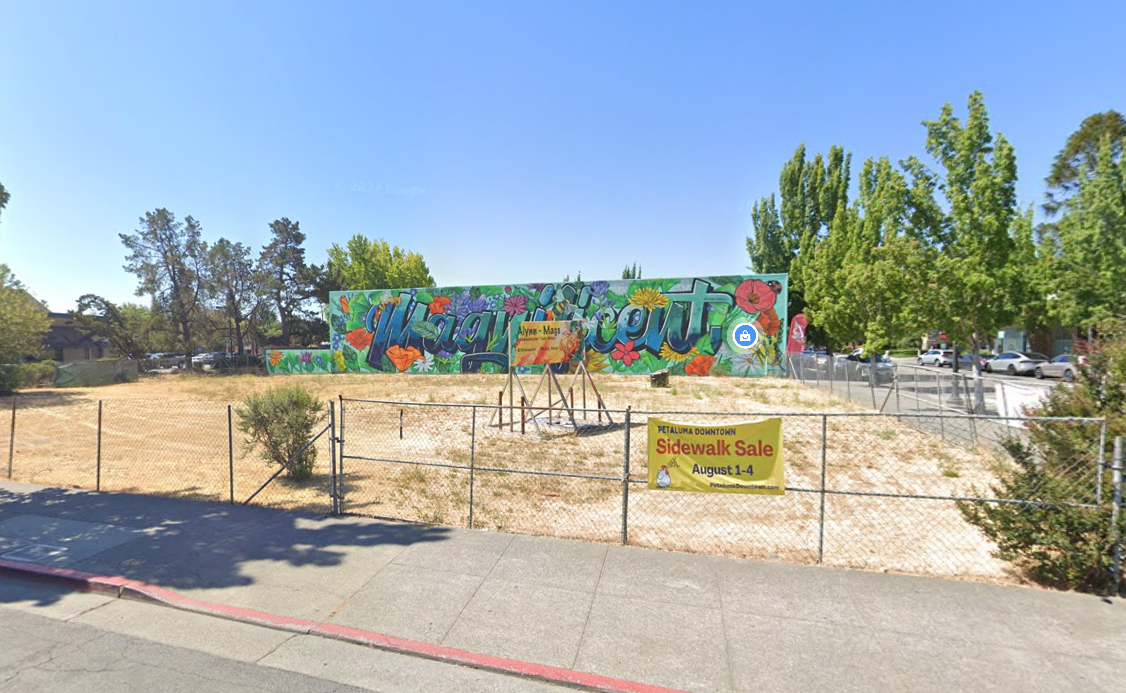
Urban designers and planners often evoke the image of “missing teeth” to describe vacant parcels, gaps in the built environment that puncture the continuity of streetscapes, interrupt pedestrian flows, and signal broader patterns of neglect [1]; these interruptions are not merely visual, as empirical evidence links them directly to measurable declines in property values, investment, and neighborhood stability [2][3].
Vacant lots depress nearby property values through mechanisms that are both perceptual and material. Hedonic pricing analyses demonstrate that proximity to vacant or abandoned parcels significantly reduces residential sale prices, with effects radiating beyond immediately adjacent properties [2][3].
These impacts arise not only from the absence of productive land use but also from the signaling effect of neglect, which influences both buyer expectations, and lender and developer behavior. In this sense, vacant lots function as localized negative public goods, imposing uncompensated costs on neighboring property owners and contributing to broader patterns of disinvestment [4].
Because such parcels often remain undeveloped for extended periods due to fragmented ownership, tax delinquency, or speculative holding, their effects are persistent rather than transient, embedding decline into the spatial and economic structure of neighborhoods.
The relationship between vacant land and public safety further underscores its active role in urban decline. While early theoretical accounts emphasized the symbolic importance of disorder, subsequent empirical work has demonstrated a causal connection between vacant lots and crime. Studies in Philadelphia employing quasi-experimental and randomized controlled designs found that vacant parcels are associated with elevated levels of gun violence, vandalism, and other offenses, and that relatively low-cost interventions such as greening and maintenance can produce substantial reductions in these outcomes [5][6].
These findings suggest that vacant lots do not merely reflect underlying social conditions but actively shape them by reducing natural surveillance, facilitating illicit activity, and discouraging legitimate use of space. The result is a feedback loop in which physical disorder contributes to social disorder, which in turn reinforces physical neglect.
Beyond crime, vacant lots have measurable effects on public health and well-being. Exposure to blighted environments has been linked to increased stress, depression, and adverse mental health outcomes, particularly among residents living in close proximity to such conditions [7]. Experimental evidence indicates that remediation of vacant land through cleaning, greening, and basic maintenance, can significantly improve residents’ perceptions of safety and reduce self-reported feelings of depression [6].
These effects operate through both environmental pathways, such as reduced exposure to hazards and nuisances, and social pathways, including increased opportunities for positive interaction and a restored sense of collective efficacy. In this way, vacant lots function as chronic environmental stressors whose impacts are unevenly distributed across populations.
From the perspective of urban economic theory, vacant lots disrupt the agglomeration dynamics that underpin downtown vitality. Cities derive their productivity advantages from density, proximity, and the intensity of interactions among businesses, workers, and consumers. Vacant parcels interrupt these spatial networks, reducing continuity in the built environment and weakening the interdependencies that sustain economic activity. In high-value downtown contexts, where accessibility and concentration are critical, the presence of vacant land represents a breakdown in spatial optimization.
These interruptions diminish pedestrian flows, fragment retail corridors, and reduce the overall attractiveness of urban space, ultimately leading to a reconfiguration of activity patterns away from affected areas [8]. The cumulative effect is not simply localized decline but a broader erosion of the downtown as an economic and social hub.
Within this context, vacant storefronts operate in a related but somewhat different manner. Short-term retail vacancies are a normal feature of dynamic markets, reflecting business turnover and adaptation to changing consumer preferences. However, when storefront vacancies become prolonged, they begin to mirror the effects of vacant lots. Persistent retail vacancy reduces foot traffic, undermines the viability of neighboring businesses, and contributes to declining commercial rents [9].
Because retail environments depend heavily on continuous activation and pedestrian presence, even a modest number of long-term vacancies can disrupt the delicate balance of urban commerce. Moreover, storefront vacancies exert a strong perceptual influence: empty windows and darkened interiors signal economic distress, altering consumer behavior and discouraging visitation [10]. This perceptual shift can initiate a feedback loop in which reduced foot traffic leads to further business closures, reinforcing the cycle of decline.
Despite these similarities, vacant lots tend to have more structurally significant impacts than storefront vacancies for several reasons. First, they typically persist longer, often remaining in a state of non-use for years or decades. Second, they represent a total withdrawal of productive activity, whereas vacant storefronts may still be actively marketed or maintained. Third, vacant lots are more likely to accumulate visible signs of neglect, amplifying their perceptual and environmental effects. Finally, although the costs of interim remediation such as greening are relatively low, institutional barriers often impede action, allowing negative externalities to persist. As a result, vacant lots function less as symptoms of economic conditions and more as anchors of decline, shaping the trajectory of neighborhoods over time.
The policy implications of this body of research are clear. Vacancy, particularly in the form of vacant land, must be understood as a public concern requiring collective intervention rather than a purely private market outcome. Strategies such as land banking, which consolidates fragmented ownership and facilitates redevelopment, have been widely advocated as mechanisms for addressing persistent vacancy [11]. Similarly, programs that focus on the interim use and maintenance of vacant lots have demonstrated measurable benefits in terms of crime reduction and community well-being [6]. Fiscal tools, including vacancy taxes or penalties, aim to discourage speculative holding and incentivize productive use, while temporary activation strategies seek to restore continuity in urban space even in the absence of permanent development [12].
Taken together, the evidence suggests that vacant lots and long-term storefront vacancies are not neutral features of the urban landscape. They are active forces that shape economic performance, public safety, and quality of life through a combination of material, social, and perceptual mechanisms. Vacant lots, in particular, exert persistent and compounding effects that undermine the foundational dynamics of urban vitality. Addressing these conditions requires not only targeted interventions but also a conceptual shift toward recognizing vacancy as a driver of urban outcomes rather than a byproduct of them.
References
[1] A. W. Spirn. 1997. Vacant Land: A Resource for Reshaping Urban Neighborhoods. West Philadelphia Landscape Project.
[2] H. S. Han, A. L. Mayer, and J. R. Nicholson. 2018. The impact of abandoned properties on nearby property values. Housing Policy Debate 28, 5 (2018), 724–741.
[3] S. Whitaker and T. J. Fitzpatrick. 2013. The impact of vacant, tax-delinquent, and foreclosed property on sales prices of neighboring homes. Journal of Real Estate Finance and Economics 47, 3 (2013), 360–389.
[4] J. Accordino and G. T. Johnson. 2000. Addressing the vacant and abandoned property problem. Journal of Urban Affairs 22, 3 (2000), 301–315.
[5] C. C. Branas et al. 2011. A difference-in-differences analysis of health, safety, and greening vacant urban space. American Journal of Epidemiology 174, 11 (2011), 1296–1306.
[6] C. C. Branas et al. 2018. Citywide cluster randomized trial to restore blighted vacant land and its effects on violence, crime, and fear. Proceedings of the National Academy of Sciences 115, 12 (2018), 2946–2951.
[7] E. C. South, M. C. Kondo, R. A. Cheney, and C. C. Branas. 2015. Neighborhood blight, stress, and health: A walking trial of urban greening and ambulatory heart rate. American Journal of Public Health 105, 5 (2015), 909–913.
[8] E. L. Glaeser. 2011. Triumph of the City. Penguin Press.
[9] J. Ferm and E. Jones. 2016. Mixed use ‘regeneration’ of employment land in the post-industrial city: Challenges and realities in London. European Planning Studies 24, 10 (2016), 1913–1936.
[10] N. A. Powe, T. Hart, and T. Shaw. 2015. Market towns: Understanding the impact of retail vacancy on place vitality. Town Planning Review 86, 6 (2015), 671–699.
[11] F. S. Alexander. 2015. Land Banks and Land Banking (2nd ed.). Center for Community Progress.
[12] City of Oakland. 2018. Vacant Property Tax (Measure W), as codified in Chapter 4.56 of the Oakland Municipal Code, imposing an annual tax on vacant parcels determined to be unused less than 50 days per year. § 4.56.010–4.56.070. Retrieved from https://oakland‑ca.elaws.us/code/coor_title4_ch4.56 (2025). :contentReference[oaicite:0]{index=0}
Renaissance Petaluma (RenPet) Research Papers present research and analysis intended to help the people of Petaluma better understand the facts and trends shaping the city’s vitality and well-being. By examining local conditions through reliable data and thoughtful interpretation, these papers aim to support informed community dialogue about Petaluma’s future.